Introduction
People visit your website. They look around. Then most of them leave without getting in touch. Why?
It is not always the price or the photos. Most of the time it is trust. Or, more accurately, the small bits of trust your website is missing.
These small bits are called trust signals. They are the parts of your page that tell a stranger you are real, safe, and worth picking up the phone to call.
The good news is, trust signals are easy to add. You do not need a new website. You just need to know which ones matter, and where to put them.
Here is a practical guide for any UK trade business.
What Trust Signals Actually Are
A trust signal is anything on your website that helps a stranger feel safe choosing you.
Think about it from the customer’s side. They have a leaky roof, or no hot water, or a garden that needs sorting. They have never met you. They are about to invite you into their home.
Your trust signals do the silent talking before you ever speak to them. They answer the questions running through their head:
- Are you real?
- Are you qualified?
- Are you insured?
- Will you turn up?
- Will you do a good job?
If those answers are not clear in the first few seconds, most people leave and try the next website.
The Trust Signals That Actually Work for Tradespeople
Some trust signals matter more than others for trade businesses. Here are the ones worth focusing on.
- Your Trade Body Number
This is the single biggest one. If you are Gas Safe registered, your number should be on the page. Same goes for NICEIC, FENSA, TrustMark, NAPIT, or any other body in your trade.
Do not just say “we are Gas Safe registered”. Show the number. The number is what makes it real.
- Proof of Insurance
Public Liability cover and Employers Liability cover. Most homeowners do not know what these are. But seeing the words on your page tells them you are a proper business, not a man with a van and a wishful smile.
You do not need to share the document. Just name the cover and the amount, such as “£5 million public liability”.
- Real Photos of Your Work
Stock photos are easy to spot. Worse, they tell the visitor you have no real work to show off.
Take photos on every job. Phone photos are fine. Get a before and after shot. Get a photo of you and your team on site. These prove you do the work you say you do.
- Named Reviews From Real Locations
A review that says “Brilliant service, Sarah” is OK. A review that says “Brilliant service, Sarah, Bath” is much better. A review that says “Brilliant service. They sorted our boiler in two hours. Sarah, Bath, March 2026” is brilliant.
Detail equals trust. Pull real reviews from Google or Trustpilot. Put them on your page with the trade, the place, and the date where you can.
- A Response Time Promise
Most trade websites say nothing about how quickly they reply. That is a missed trick.
Add a simple line such as “We reply to new enquiries within 30 minutes during working hours”. It tells the visitor you take their problem seriously. It also helps you stand out from the trades who take days to reply.
- Your Face
People buy from people. A real photo of you, or you and your team, beats a logo every time.
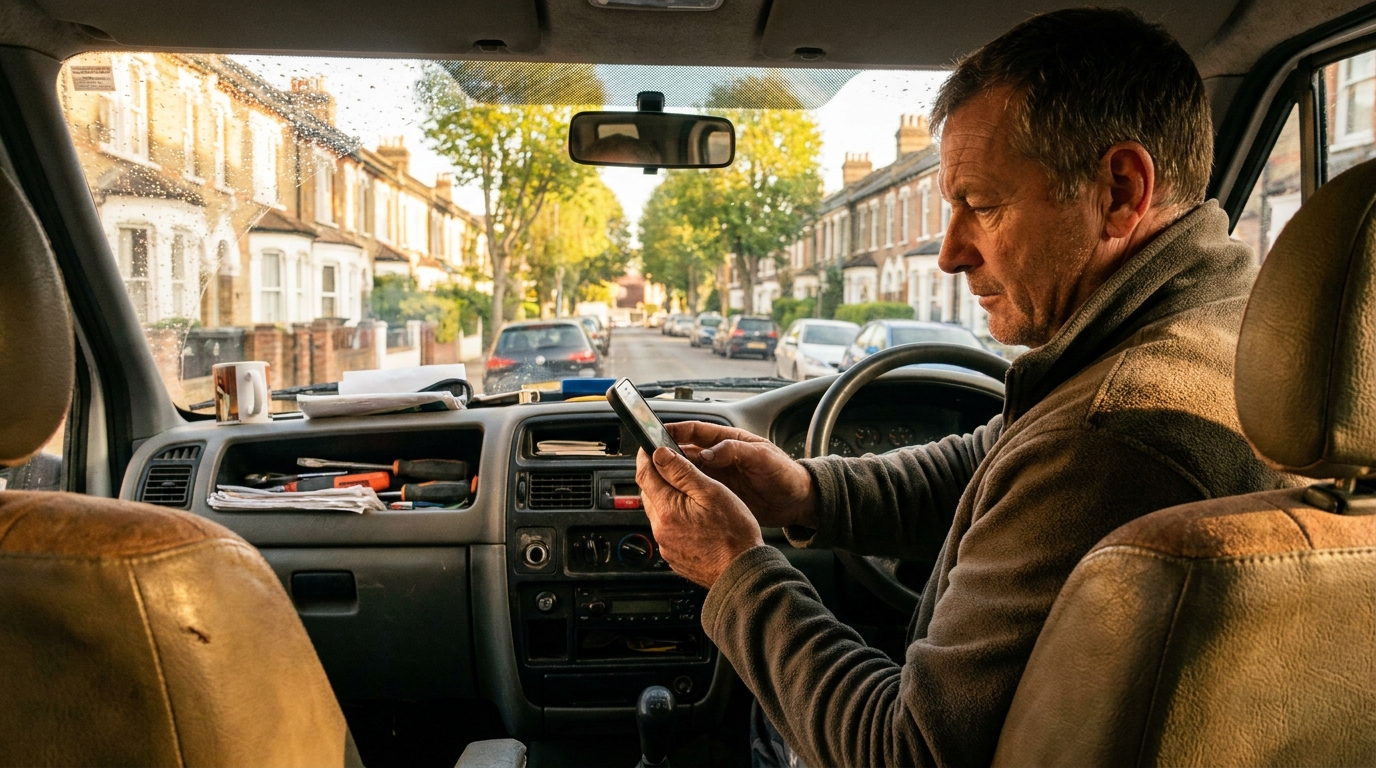
Even a phone selfie in your van is fine. It says “I am a real person who will turn up tomorrow”.
Where to Put Them
Trust signals only work if people see them. Here is where to place them.
Above the fold. The part of the page people see before they scroll. Put your two strongest trust signals here. For most trades that is the trade body number and a named review.
On every service page. If you have a page for boiler servicing, the page should show the trade body number, a relevant review, and a photo of you doing that work.
In your footer. The full set. Insurance details, trade body numbers, links to your reviews, and your service area.
On your contact page. The response time promise. Right next to the enquiry form.
The mistake most trade websites make is hiding trust signals on a single “About Us” page. By the time the visitor finds them, they have already left.
A 15-Minute Trust Audit You Can Do Today
Open your website on your phone. Go to your homepage. Time yourself for 15 minutes. Tick off these checks:
- Can you see a trade body number above the fold?
- Can you see a named review with a real location?
- Can you see at least one real photo of your work?
- Can you find your public liability cover anywhere?
- Is your face on the website somewhere?
- Is there a response time promise near the enquiry form?
If you scored less than 5 out of 6, you have an easy job ahead of you.
If you would like a longer list of quick wins, we have put together a free guide called 31 Things You Can Do This Week (Right Now) To Build Your Trade Business. You can grab a copy at 31things.wearebrightr.com.
The Bigger Picture
Trust signals are the small bits of your website that make customers say yes. They are not complicated, and they do not cost much. But most trade websites still miss them.
The good news is, you can fix the lot in an afternoon.
If you would like a fresh pair of eyes on your website, we offer a free Marketing Flight Check. We take a look at your site, your reviews, your Google Business Profile, and tell you what is helping and what is hurting. No jargon, no pressure.
And if you are thinking your whole website needs more than a few tweaks, take a look at our Business Class Websites™. They are built for trade businesses, with trust signals baked in from day one.